
How to Issue Tokenized Bonds in Germany
Explore German bond tokenization using the electronic securities framework, with practical steps for registrars, offering documents and servicing.
Introduction
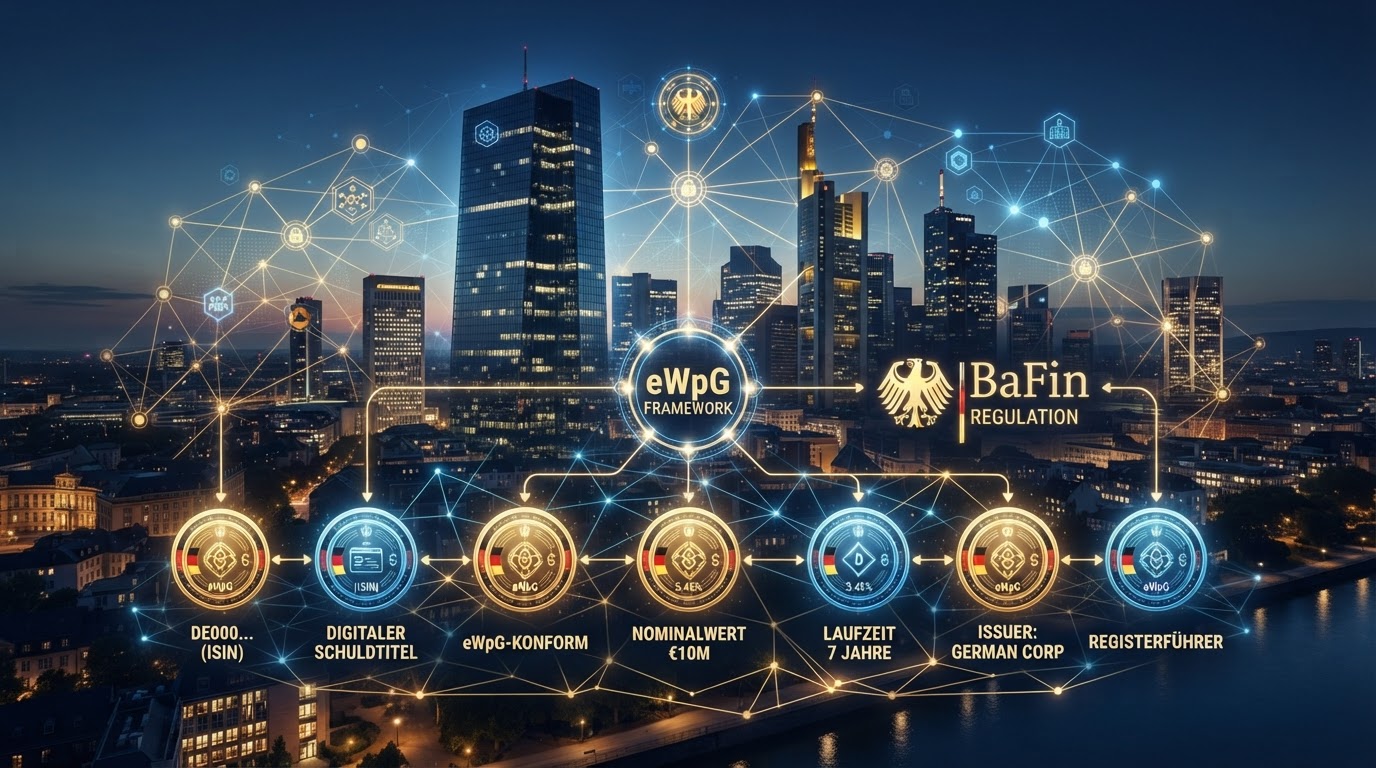
Germany provides a specific electronic securities framework that is relevant to issuers considering digital debt. A company planning a tokenized bond should begin by deciding how the security will be legally issued and recorded, rather than assuming that a conventional token contract is enough.
The Electronic Securities Act, commonly called eWpG, establishes rules for electronic securities and their register. BaFin separately explains that operating as a crypto securities registrar generally requires authorisation. These are important foundations for a project using that route.
Establish the Financing and Investor Claim
Define the borrower, principal, coupon, maturity and payment priority. If the bond is asset-backed, identify the assets, security arrangements and enforcement process. Review existing financing restrictions and decide whether additional creditor consents are needed.
Consider a hypothetical logistics company issuing debt to finance equipment. Token holders would own the bond claim described in the terms. They would not automatically own individual trucks or machines. The value of that claim depends on repayment capacity and any legally established security.
Choose the Register Model and Provider
Determine whether the proposed instrument and issuance structure fit the relevant eWpG route. Appoint a suitable registrar and align issuance documentation with the register's operating requirements. The Act includes requirements concerning the availability of issuance terms before registration.
Ask the registrar and legal advisers to explain the registration and transfer process in plain language. Identify the authoritative record, investor identification arrangements and procedures for corrections. Review the provider's permissions and the services included in its contract. Registration, custody and distribution should each have a named responsible party.
Address the Offering and EU Perimeter
Assess prospectus requirements or an available exemption for the proposed offer and investor audience. Confirm the permissions needed for distribution and any secondary trading arrangements. Avoid applying a generic crypto offering template to a bond.
ESMA's guidelines clarify the assessment of crypto-assets that qualify as financial instruments. A tokenized bond that is a financial instrument falls outside MiCA's scope for such instruments and requires the relevant securities-law analysis. MiCA authorisation alone should not be assumed to cover the securities activities involved.
Design Servicing and Settlement Before Issuance
The operating plan should cover subscriptions, allocation, token or register delivery, interest payments, notices and repayment at maturity. Determine how the investor register supports payment entitlement on record dates. Address tax reporting and withholding with specialists familiar with the instrument and investor base.
Test an investor transfer shortly before a coupon payment, a failed cash settlement and a lost-key request. Set procedures for administrator access and technology provider failure. Where payments and asset transfers occur on different systems, define when each becomes final and how exceptions are resolved.
Finally, assess whether the bond's size supports the full cost of legal work, distribution, registration, custody and servicing. Explain resale restrictions and any actual venue access without promising a liquid market. A successful German issuance is a functioning debt investment supported by the appropriate register and providers, with measurable benefits from its digital form.
Sources
- German Electronic Securities Act eWpG, German official text
- BaFin Crypto Securities Registrars
- ESMA Guidelines on Qualification of Crypto-assets as Financial Instruments