
How to Tokenize Investment Fund Interests in Luxembourg
Learn the practical steps for Luxembourg fund tokenization, including ownership records, control agents, service providers and operational resilience.
Introduction
Luxembourg is a relevant option for managers assessing tokenized investment funds because the project can be considered alongside an established fund administration model. The decision is whether distributed ledger technology improves the ownership and servicing process for a particular fund and investor audience.
The CSSF published a tokenization FAQ on October 2, 2026. It addresses Luxembourg fund tokenization and the control-agent framework, including technology support and operational resilience. For a manager planning a launch, this is a useful current reference for discussions with administrators, legal advisers and technology providers.
Choose the Fund Before Designing the Token
Define the investment strategy, investor category and proposed fund structure. A private credit fund, property fund and diversified securities fund have different operating requirements. Tokenization does not determine which structure is available or what investors it may admit.
Decide whether the project creates a new fund, adds a tokenized class or changes how an existing class is administered. Review fund documents, investor consent requirements, distribution arrangements and tax treatment. Compare the expected servicing improvement with the recurring costs of maintaining digital infrastructure.
Explain the Ownership Record and Control Agent
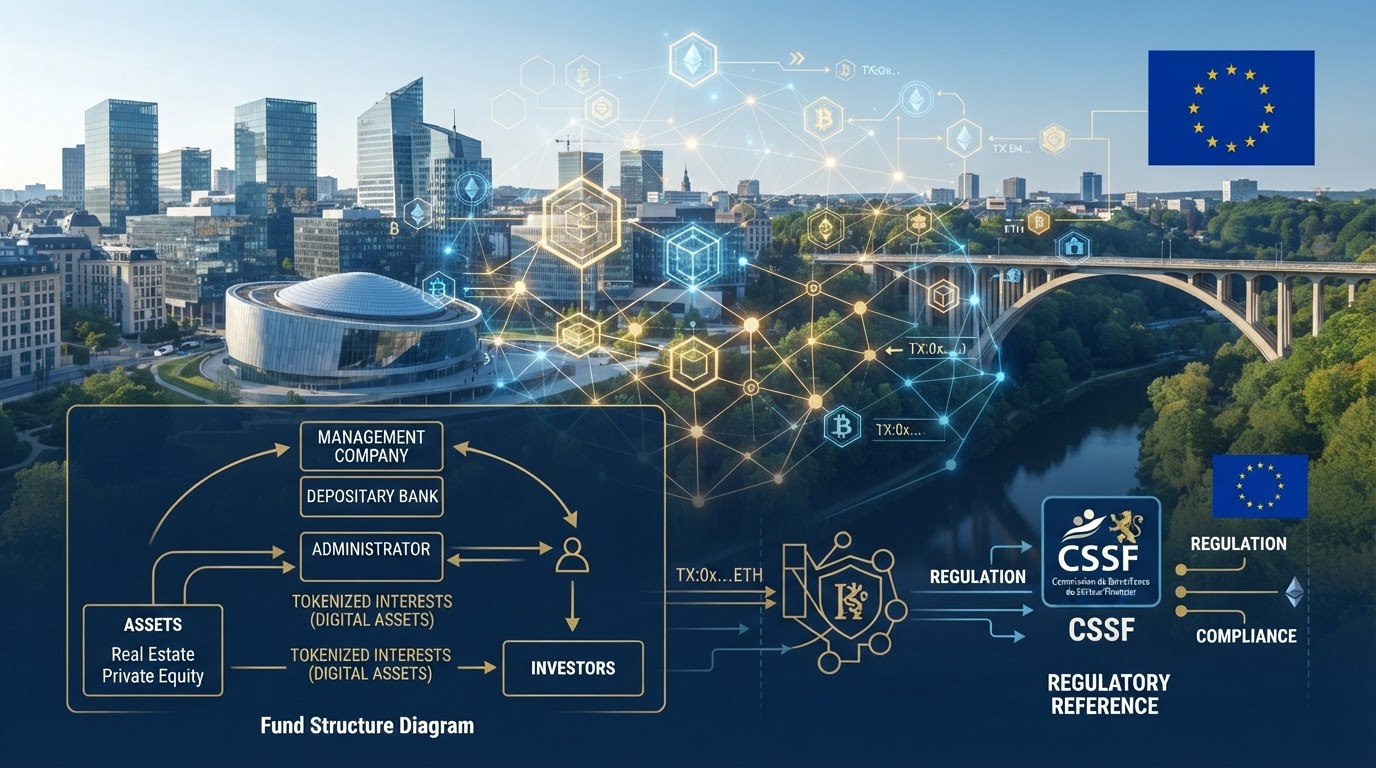
Create a clear diagram of the legal entities and records involved. Identify which record establishes investor holdings, how token balances relate to issued units and who corrects discrepancies. The investor should be able to understand who recognises the holding and how the associated rights can be exercised.
Where a control agent is part of the chosen arrangement, assess its role and eligibility with reference to the governing framework and CSSF expectations. Avoid treating a software vendor as a substitute for an accountable regulated service provider. The October FAQ is particularly useful for assessing the proposed operating model.
Include Resilience and Outsourcing in the Design
The CSSF FAQ addresses DORA requirements in relation to control agents and the use of third parties for technical support. It also discusses notifications for relevant ICT arrangements. These considerations belong in the initial provider selection and launch timetable.
In practical terms, require a responsibility schedule covering smart contract administration, security incidents, data availability, reconciliation and migration. Test how the fund would operate if a provider became unavailable. Preserve access to records and define the process for replacing keys, systems or vendors.
Keep the EU Regulatory Boundary Clear
A tokenized financial instrument is not automatically governed by MiCA merely because it uses blockchain technology. ESMA's classification guidelines address when crypto-assets qualify as financial instruments and therefore fall outside MiCA's financial-instrument perimeter. The relevant securities and fund rules still need to be considered.
Consider a hypothetical private credit fund that introduces tokenized units for eligible investors. The administrator reconciles subscriptions and holdings, while the manager continues underwriting loans and valuing the portfolio. Tokenization may improve record exchange, but it does not create liquid borrowers or immediate fund redemptions.
Before launch, run subscriptions, transfers, income allocations and a stressed redemption scenario. Confirm marketing permissions in every target country. A sound Luxembourg implementation connects the legal register, provider responsibilities and technical controls to a fund whose economics already make sense.
Sources
- CSSF FAQ Tokenisation, October 2, 2026
- ESMA Guidelines on Qualification of Crypto-assets as Financial Instruments