
Investor Privacy on Public Blockchains: What Should Stay Off-Chain?
How to protect identities, documents, and sensitive financial information while supporting verification.
Introduction
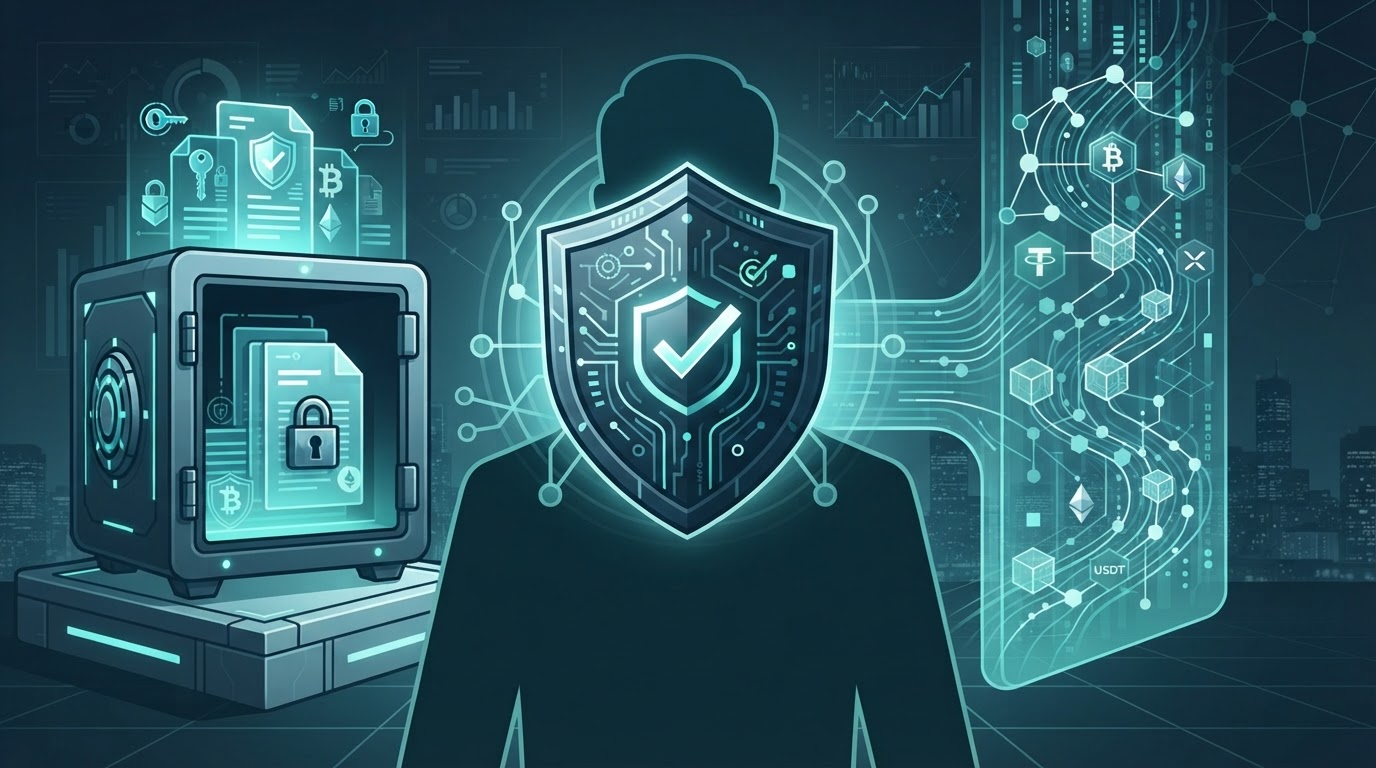
Public blockchains are transparent by default — balances, transfers, and timing are visible to anyone. For institutional investors in tokenized securities, that transparency can conflict with the need to protect identities, documents, and sensitive financial information. This article explains how to protect what should stay off-chain while still supporting verification.
What Should Stay Off-Chain
- Investor identities, names, and contact details
- KYC and accreditation documentation
- Beneficial ownership behind a wallet
- Investment amounts that could reveal portfolio strategy
- Negotiated terms, pricing, and side letters
The Transparency Default
On a public chain, anyone can see that wallet A sent tokens to wallet B at a given time. Even when wallets are pseudonymous, patterns emerge: transfer sizes, timing, and counterparties can deanonymize investors who also use the same wallets elsewhere. For institutions, this is often unacceptable.
Wallet Hygiene and Separation
A basic protection is wallet hygiene: use dedicated wallets for each tokenized position, never reuse them across unrelated activity, and never link them to publicly known wallets. This prevents an observer from connecting a tokenized-asset wallet to other on-chain behavior. It is not privacy in the cryptographic sense, but it raises the cost of deanonymization.
Compliant Privacy Layers
Some designs use zero-knowledge proofs or shielded transfers to hide transfer amounts and counterparties while preserving the ability to prove compliance to authorized parties. These add complexity and cost but can deliver genuine confidentiality for institutional flows. The tradeoff is auditability — a regulator or auditor must still be able to verify the activity under defined conditions.
Verification Without Exposure
Verification does not require publishing everything. A transfer agent can attest that a wallet is KYC'd without publishing the identity. An auditor can confirm balances under a confidentiality agreement. Privacy and verifiability are not opposites — they are both achieved by controlling who sees what, and under what conditions.
Document and Data Protection
Offering documents, investor statements, and KYC packages should never live on-chain. They belong in access-controlled systems with audit logs, retention limits, and encryption. The chain records ownership and transfers; the off-chain systems record the rest. Blurring that line is how data leaks happen.
Regulatory Expectations
Regulators increasingly expect privacy to coexist with verifiability — not one at the expense of the other. Travel rule obligations, sanctions screening, and beneficial ownership reporting all require that the right parties can see the data even when the public cannot. A credible privacy design supports both.
Privacy as a Design Discipline
Privacy on a public chain is not a feature you toggle; it is a discipline you maintain across every transaction, every wallet, and every document. It requires wallet hygiene, compliant privacy layers, access-controlled off-chain storage, and clear policies for who may see what and under what conditions. Done well, it lets institutional investors participate in transparent markets without exposing their positions, their counterparties, or their strategy. Done poorly, it leaks exactly the information the institution most wanted to protect — and once on-chain data is public, it cannot be made private again.
Conclusion
On a public chain, investor privacy is a design discipline: keep identities, documents, and sensitive financials off-chain; use wallet hygiene and compliant privacy layers; and verify through controlled access rather than public disclosure. Transparency and confidentiality are both achievable when each is engineered deliberately.