The Oracle Problem: Connecting Real-World Information to Blockchain Records
How valuations, payment events, and other external data reach tokenization platforms and how data reliability is assessed.
Introduction
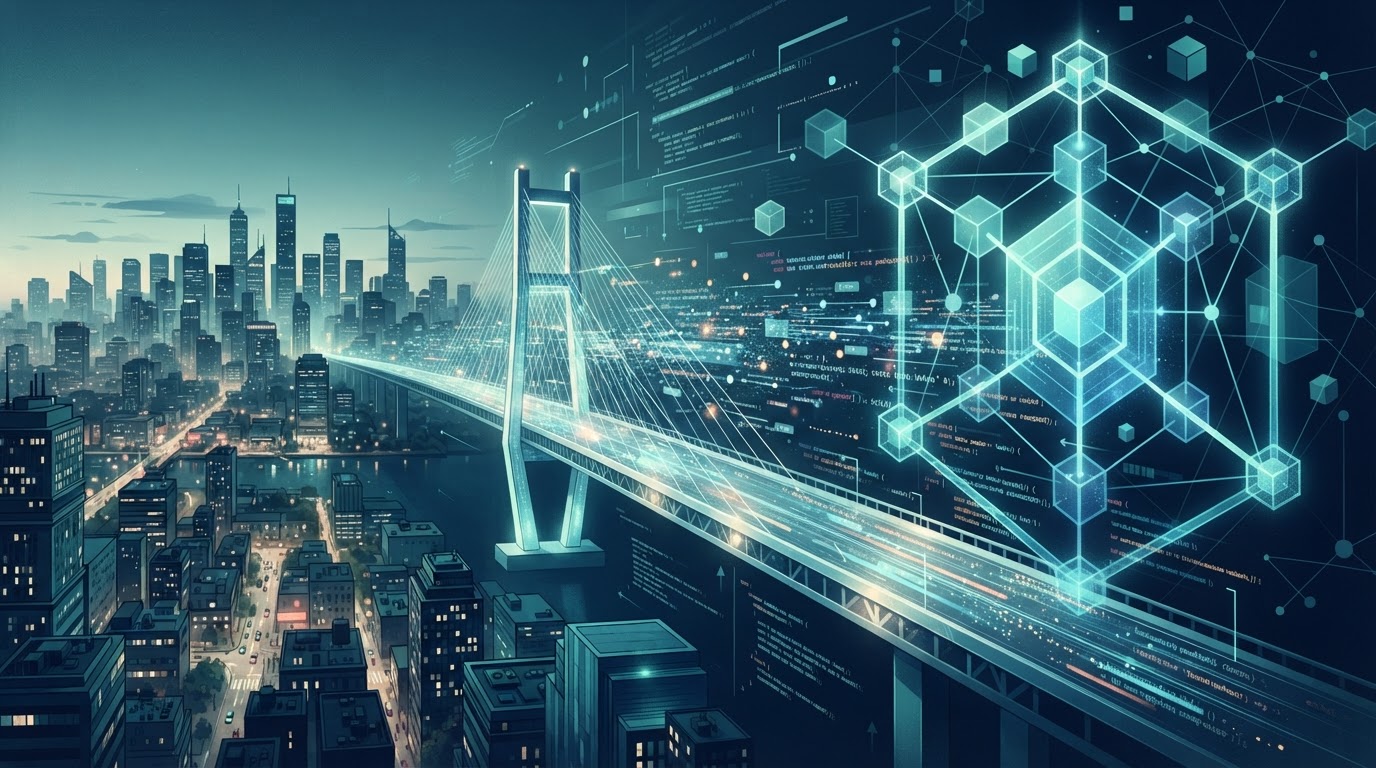
A blockchain is a closed system. It knows its own state but nothing about the outside world — the price of an asset, whether a payment was made, whether a building is occupied. To act on real-world events, tokenization platforms rely on oracles: services that deliver external data on-chain. This article explains how valuations, payment events, and other external data reach tokenization platforms and how to assess their reliability.
What an Oracle Does
An oracle is a bridge between off-chain reality and on-chain logic. It takes an external fact — a price, a payment confirmation, a valuation, an occupancy reading — and writes it to the chain so a smart contract can use it. Without oracles, a token contract cannot trigger a distribution, update a NAV, or enforce a collateral call.
Types of Real-World Data
- Market prices for traded assets used in valuation
- Payment confirmations from banking or payment rails
- Appraisal values for illiquid real-world assets
- Event data — defaults, maturities, covenant breaches
- Reference data — KYC status, sanctions screenings, wallet whitelists
Single Versus Multiple Sources
A single oracle is a single point of failure. If it goes down, feeds bad data, or is manipulated, the contract executes on wrong information. Robust designs use multiple independent sources and aggregate them — median or outlier-filtered — so no single source can corrupt the result. The number and independence of sources is a key reliability indicator.
Data Latency and Freshness
How current is the data? A price feed updated every minute is more useful than one updated hourly, and a same-day valuation is more useful than a quarterly one. Latency determines how quickly a contract can react to real-world changes, and stale data is a common source of errors in automated token logic.
Manipulation and Manipulation Resistance
Oracles can be attacked. A flash-loan attack can manipulate a thin market price feed long enough to trigger a liquidation or misvalue an asset. Manipulation-resistant designs use time-weighted averages, volume weighting, and circuit breakers that ignore sudden outlier moves. Understand the manipulation surface before relying on a feed.
On-Chain Versus Off-Chain Calculation
Some calculations are better done off-chain and the result posted on-chain; others are computed on-chain from raw oracle inputs. Off-chain calculation is cheaper and more flexible but less transparent; on-chain is transparent but expensive and harder to update. The choice affects cost, auditability, and trust.
Designing for Failure
The strongest oracle designs assume that any single source will eventually fail, go stale, or be manipulated, and they degrade gracefully when it does. They use fallback sources, circuit breakers that halt execution on outlier data, time-weighted averages that resist momentary spikes, and transparent on-chain records that let observers detect problems early. An oracle design that never considers failure is an oracle design that will fail expensively the first time reality diverges from its assumptions. Plan for the data to be wrong, and the system will still be right when it matters.
Conclusion
Oracles are the connective tissue between real-world events and on-chain logic. Their reliability determines whether distributions, valuations, and enforcement actions are correct. Multiple independent sources, low latency, and manipulation resistance are the hallmarks of a design worth trusting.