SPVs Explained: How Real-World Assets Are Structured Before Tokenization
Why issuers use special purpose vehicles and how SPV structures connect investors to the underlying assets being tokenized.
Introduction
Most institutional tokenization projects do not tokenize an asset directly. They tokenize a legal entity that owns the asset. That entity is usually a Special Purpose Vehicle (SPV) — a thinly capitalized company formed for the sole purpose of holding one asset or one pool of assets. This article explains why issuers use SPVs, how the structure connects investors to the underlying asset, and what to check before relying on one.
Why Issuers Use SPVs
An SPV solves three problems at once. It isolates risk by separating the asset from the sponsor's balance sheet, so a sponsor bankruptcy does not drag the asset into the estate. It clarifies ownership by giving investors a clean, identifiable entity to invest in rather than a slice of a complex parent company. And it enables bankruptcy remoteness, the legal principle that lets the asset survive the sponsor's failure and continue servicing investors.
How an SPV Connects Investors to the Asset
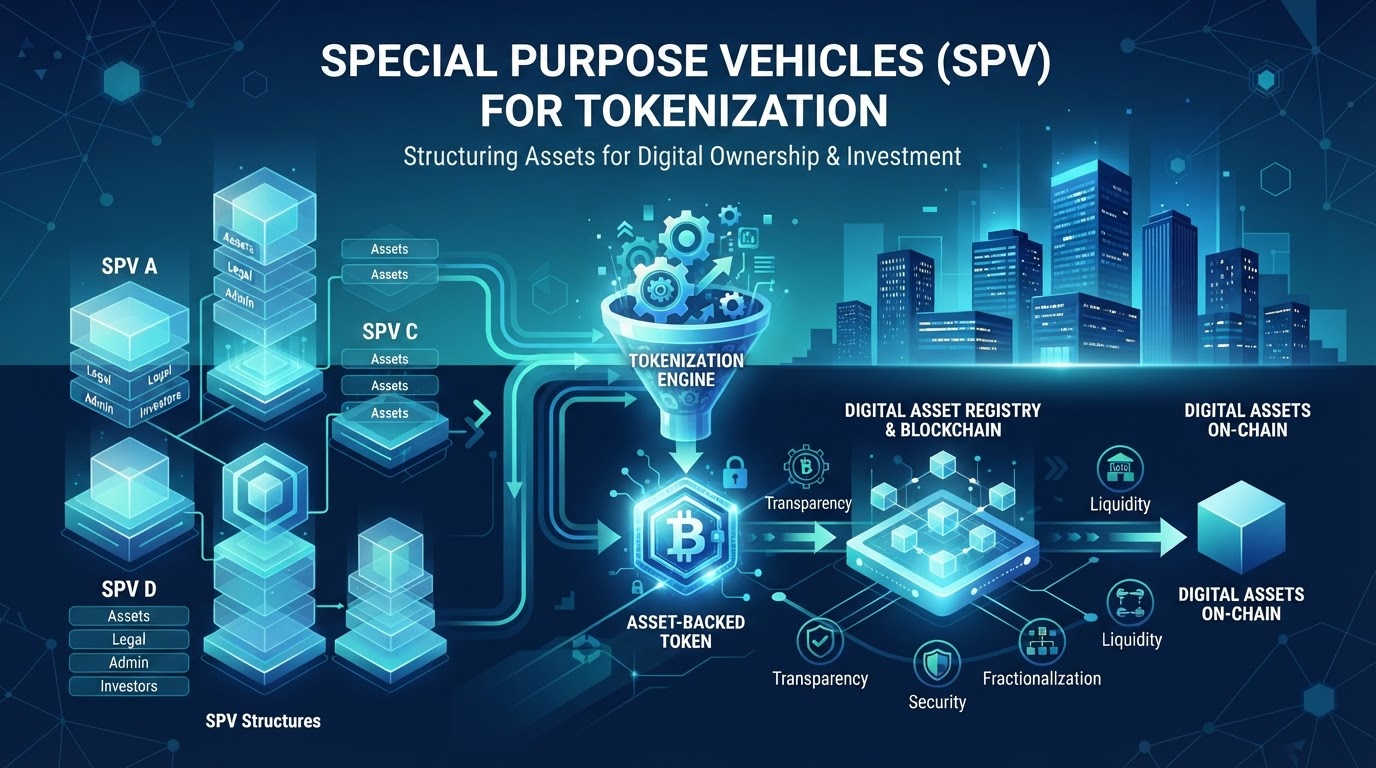
A typical structure works like this: the sponsor contributes the asset to the SPV in exchange for the SPV's equity. The SPV then issues tokens representing fractional interests in itself to investors. Because the SPV — not the sponsor — owns the asset, tokenholders have a claim against the SPV and the asset it holds, not against the sponsor's other businesses. The blockchain records the token transfers; the SPV's governing documents define the rights.
Bankruptcy Remoteness in Practice
Bankruptcy remoteness is not automatic. It requires the SPV to be structured so that, in a sponsor insolvency, a court will treat the SPV's assets as belonging to the SPV and its investors rather than the sponsor's creditors. This depends on independent directors, limited purposes clauses, non-petition covenants, and genuine separateness of operations. When these are missing or cosmetic, the protection fails precisely when it matters most.
What Can Go Wrong
- The sponsor commingles SPV cash with operating cash, piercing the corporate veil
- The SPV is undercapitalized and cannot cover operating costs or servicing
- The asset is never actually transferred to the SPV, leaving investors with a claim against nothing
- Related-party transactions move value out of the SPV ahead of tokenholders
- The governing law does not recognize the structure as bankruptcy-remote as claimed
What to Verify Before Investing
Confirm that the asset was legally transferred to the SPV. Read the SPV's formation documents for limited-purpose and non-petition provisions. Check that the SPV has its own bank accounts, directors, and books. Review any related-party agreements for terms that disadvantage tokenholders. And confirm that the token actually represents an interest in the SPV rather than a contractual promise from the sponsor to pay.
SPVs Versus Trusts
Some structures use a trust instead of an SPV. A trust separates legal title (held by the trustee) from beneficial interest (held by tokenholders), which can be cleaner in certain jurisdictions and for certain asset types. The choice between SPV and trust depends on tax, regulatory, and insolvency considerations specific to the deal.
Conclusion
An SPV is the connective tissue between a real asset and a blockchain token. When properly structured, it gives tokenholders a clean, enforceable, bankruptcy-remote claim. When poorly structured, it gives them a claim on an empty shell. The quality of the legal entity matters as much as the quality of the asset inside it.