
What Does Your Token Actually Own? Understanding Legal Rights Behind Tokenized Assets
Explain the relationship between a token, the underlying asset, and the holder's enforceable legal rights.
Introduction: A Token Is Not the Asset
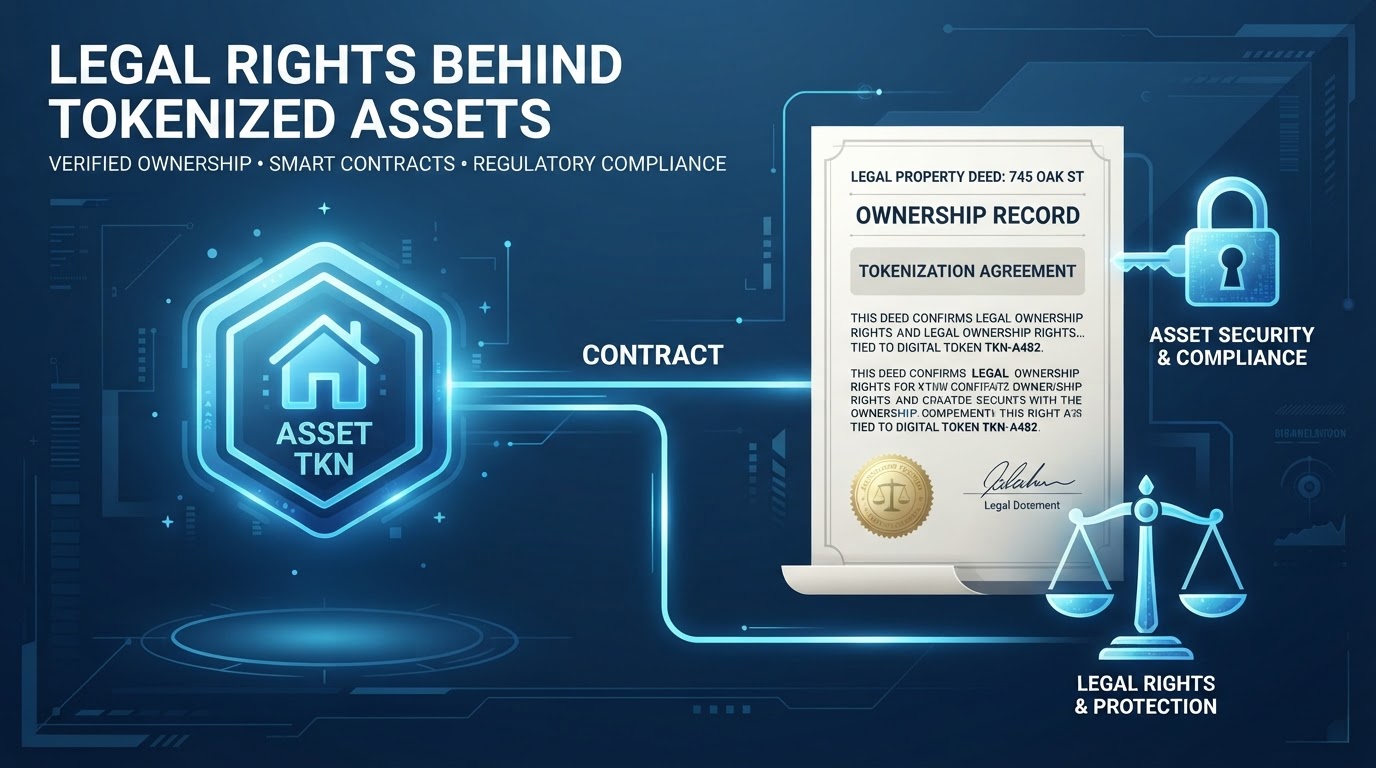
A token is a digital record. The asset is the building, the bond, the invoice, or the gold bar sitting in a vault. The token is the claim on that asset — and the enforceability of that claim depends entirely on the legal scaffolding built behind it. This article explains the relationship between a token, the underlying asset, and the legal rights a holder actually receives, so you can evaluate a tokenized offering the way an institutional investor would.
The Three Layers of Every Tokenized Asset
Every credible tokenized asset sits on three layers. The asset layer is the real thing of value — the property, the receivable, the royalty stream. The legal layer is the contract, entity, or trust that maps the token to the asset and defines who has what rights. The technical layer is the blockchain record that makes transfers fast and auditable. The technical layer is the easiest to build and the least important to get right. The legal layer is where most value is either protected or lost, and where most issuers cut corners.
What Rights Does the Token Convey?
Depending on structure, a token might convey any of the following, and each carries different tax, regulatory, and bankruptcy consequences:
- Equity in a special purpose vehicle (SPV) that owns the asset
- A debt claim against the issuer or sponsor
- A beneficial interest in a bankruptcy-remote trust
- A fractional ownership interest in the titled asset itself
- A purely contractual right to receive future distributions or revenue share
- A license, usage, or utility right with no financial claim at all
Two tokens can look identical on-chain and convey entirely different legal rights. Read the offering memorandum, the subscription agreement, and the tokenholder agreement before you read the whitepaper.
Direct, Indirect, and Synthetic Exposure
Some tokens represent direct ownership of the asset. More commonly they represent indirect ownership through an SPV or trust. A third category — synthetic exposure — gives holders a contractual payout linked to the asset's price without transferring any ownership at all. Synthetic structures are cheaper to operate but offer no claim in bankruptcy, which matters enormously when an issuer fails.
Enforceability: The Right You Can Actually Use
A right you cannot enforce is not a right. Enforceability depends on the jurisdiction of the issuer, the identity and solvency of the counterparty, the clarity of the subscription agreement, and whether the claim is recognized in insolvency proceedings. A token minted without a binding legal wrapper is, at best, a receipt — and in a dispute, the court will look past the blockchain record to the underlying contracts. Ask who you would sue, where, and on what document.
Bankruptcy Remote and Not Remote
If the asset sits inside a bankruptcy-remote SPV or trust, a sponsor bankruptcy should not pull the asset into the estate. If the asset sits on the issuer's balance sheet, it does. The difference between these structures determines whether tokenholders recover anything when things go wrong, and it is usually buried in the offering documents rather than the token contract.
Transfer Restrictions and Resale
Most security tokens carry transfer restrictions — whitelists, lockups, holding periods, and jurisdictional limits imposed by the securities exemption used at issuance. A token you cannot legally transfer is worth less than one you can, regardless of what the secondary market shows. Understand the transfer rules before you assume liquidity.
Conclusion
Before evaluating price, evaluate rights. The token is only as valuable as the legal claim it represents, the entity that holds the asset, and the court system willing to uphold it. When the legal layer is strong, tokenization adds speed and transparency on top of a solid foundation. When it is missing, the technology is just a faster way to lose money.