
How Tokenized Assets Can Be Used as Collateral
Lending arrangements, valuation haircuts, eligibility requirements, and liquidation mechanics.
Introduction
Tokenized assets can be used as collateral for loans — pledged to a lender in exchange for liquidity without selling the position. This article explains lending arrangements, valuation haircuts, eligibility requirements, and liquidation mechanics so borrowers and lenders can evaluate collateralized tokenized-asset lending.
How Tokenized Assets Become Collateral
A borrower pledges tokenized assets to a lender — often through a smart contract that locks the tokens — and receives a loan against them. The lender holds a security interest in the pledged tokens. When the loan is repaid, the tokens are released; if the borrower defaults, the lender can liquidate the collateral. The mechanism is well established in traditional finance and increasingly common on-chain.
Valuation and Haircuts
Lenders do not lend the full value of the collateral. They apply a haircut — a discount to the market or NAV value — to protect against price declines and illiquidity. A 50% haircut on a $100 asset means a $50 loan. Haircuts are larger for volatile or illiquid assets and smaller for stable, liquid ones. The haircut is the lender's primary risk control.
Eligibility Requirements
- The asset must be liquid enough to sell in a default
- The token must be transferable and free of restrictions that block liquidation
- The holder must have clear, unencumbered ownership
- Compliance status must support transfer to the lender or a liquidation venue
- The asset's volatility and correlation must fit the lender's risk model
Loan-to-Value and Margin Calls
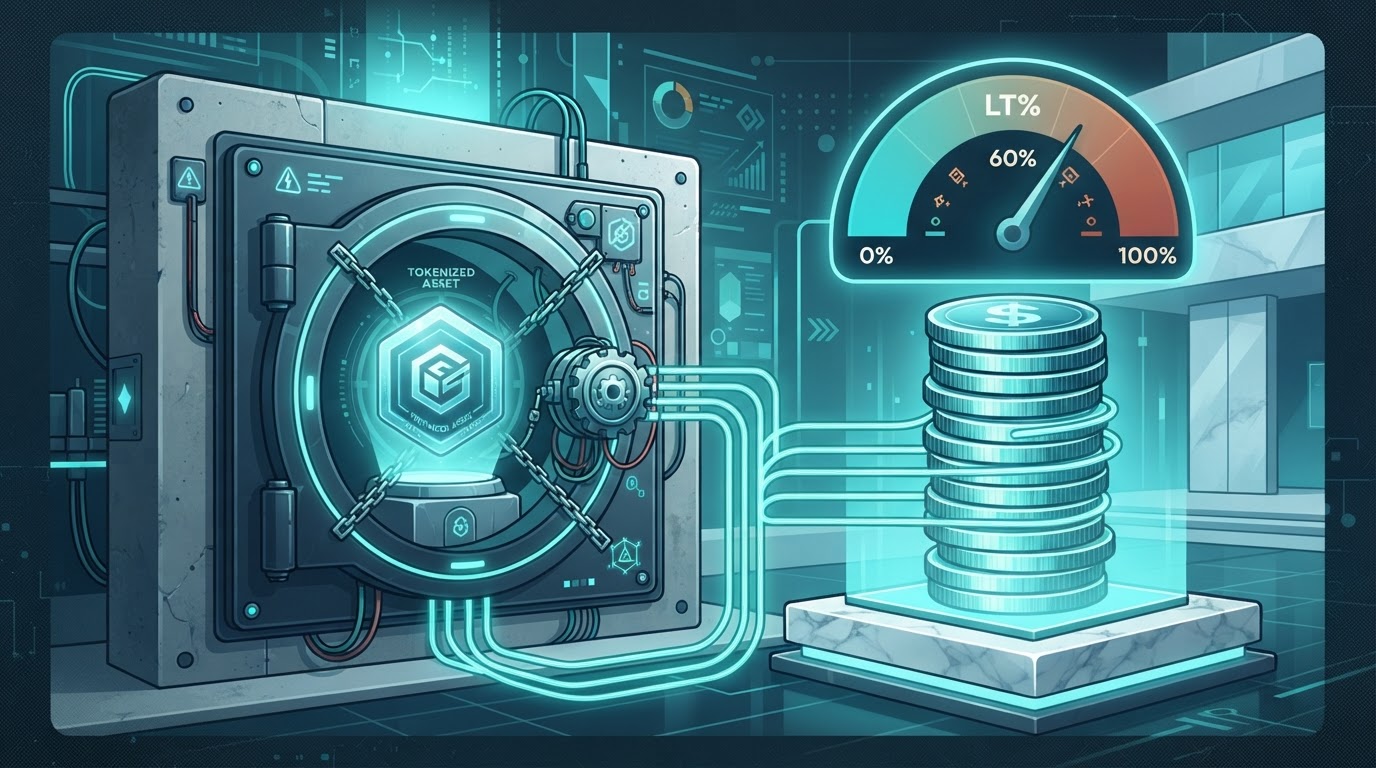
The loan-to-value ratio compares the loan to the collateral value. As the collateral value falls, LTV rises. When LTV breaches a threshold, the lender issues a margin call — requiring the borrower to add collateral or repay part of the loan. If the borrower does not respond, liquidation begins. Understanding the LTV limits and margin-call terms is essential before borrowing.
Liquidation Mechanics
On default, the lender liquidates the collateral to recover the loan. Liquidation can be automated through the smart contract — selling the pledged tokens into a market — or handled manually. The method, speed, and venue determine how much is recovered and how much value is lost to market impact. Poorly designed liquidation can destroy value that a better process would preserve.
Risks for Borrowers and Lenders
Borrowers face liquidation if collateral value drops and they cannot meet a margin call — losing an asset they wanted to keep. Lenders face recovery shortfalls if liquidation proceeds do not cover the loan, especially in volatile markets or with illiquid collateral. Both sides should model downside scenarios, not just the base case.
Compliance and Transferability
Collateral only works if it can be transferred in a default. Transfer restrictions, whitelisting, or KYC requirements can block liquidation at the worst moment. A lender should confirm that the pledged tokens can be moved to a liquidation venue under the platform's rules before accepting them as collateral.
Conclusion
Tokenized assets can serve as efficient collateral, but the lending arrangement, valuation haircuts, eligibility requirements, and liquidation mechanics determine whether it works in a downturn. Model the margin call and the liquidation before you borrow or lend — because that is when the structure is actually tested.