Tokenized Bonds Explained: Coupons, Maturity, and Repayment
How a digital bond operates from issuance through interest payments, maturity, and redemption.
Introduction
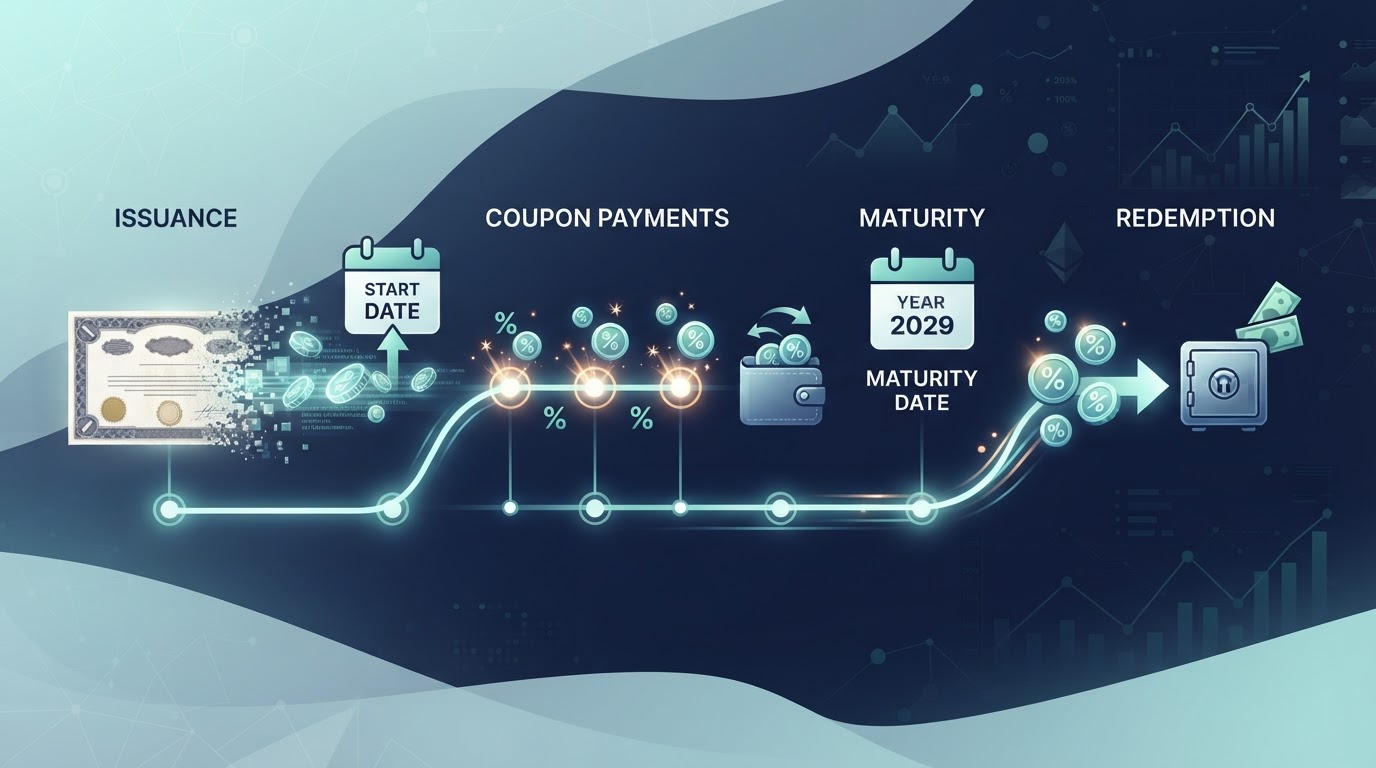
A tokenized bond is a digital representation of a debt instrument — a promise to pay periodic interest and return principal at maturity. This article explains how a digital bond operates from issuance through interest payments, maturity, and redemption.
Issuance
A tokenized bond is issued by an issuer — a corporation, sovereign, or SPV — to raise capital. The issuer defines the principal amount, coupon rate, payment frequency, maturity date, and currency. Investors subscribe, and tokens representing their holding are minted to their wallets. The offering documents and the token contract together define the bond's terms.
Coupons and Interest Payments
The coupon is the periodic interest payment the issuer owes to bondholders. On a tokenized bond, coupons can be paid on-chain — for example, in stablecoin to eligible wallets — or off-chain in fiat. The payment uses a record date to determine who is eligible: whoever holds the bond token at the snapshot receives the coupon. Coupons continue on schedule until maturity or default.
Accrual and Record Dates
Interest accrues between coupon dates and is paid on a defined schedule — monthly, quarterly, semiannual, or annual. The record date fixes eligibility for each payment. Holders who transfer their tokens before the record date do not receive the next coupon; the buyer does. Getting the record date right is what makes the on-chain payment correct.
Maturity
At maturity, the bond's principal becomes due. The issuer repays the principal amount to bondholders, again using a record date to determine eligibility. After principal is repaid, the bond is redeemed and the tokens are typically burned or marked as paid. Maturity is the end of the bond's life and the largest single cash flow.
Redemption and Repayment
Redemption is the process of returning principal to bondholders and retiring the bond. It can happen at maturity, through an early call if the bond terms permit, or through a default and workout. Each path has different mechanics and timing, and the bond's indenture defines which paths are available and on what terms.
Early Calls and Put Options
- A callable bond lets the issuer repay principal before maturity, usually at a premium
- A puttable bond lets the investor demand early repayment under defined conditions
- Call protection limits when the issuer can call the bond
- Terms are defined in the indenture and reflected in the token contract
Default and Recovery
If the issuer misses a coupon or fails to repay principal at maturity, the bond is in default. Recovery depends on the bond's seniority, collateral, and the issuer's solvency. Senior unsecured bondholders recover more than subordinated holders but may still take a loss. Tokenization does not change the economics of default — it changes the efficiency of the payment and reporting.
Conclusion
A tokenized bond follows the same lifecycle as a traditional bond — issuance, coupons, maturity, redemption — with payments executed and recorded on-chain. The technology improves settlement and reporting but the fundamentals of debt remain: the issuer's ability to pay determines whether coupons and principal arrive. Read the indenture, understand the call features, and model the default case before you buy.