
When Tokenization Does Not Make Business Sense
How to determine whether tokenization's benefits justify its costs for a particular asset or business.
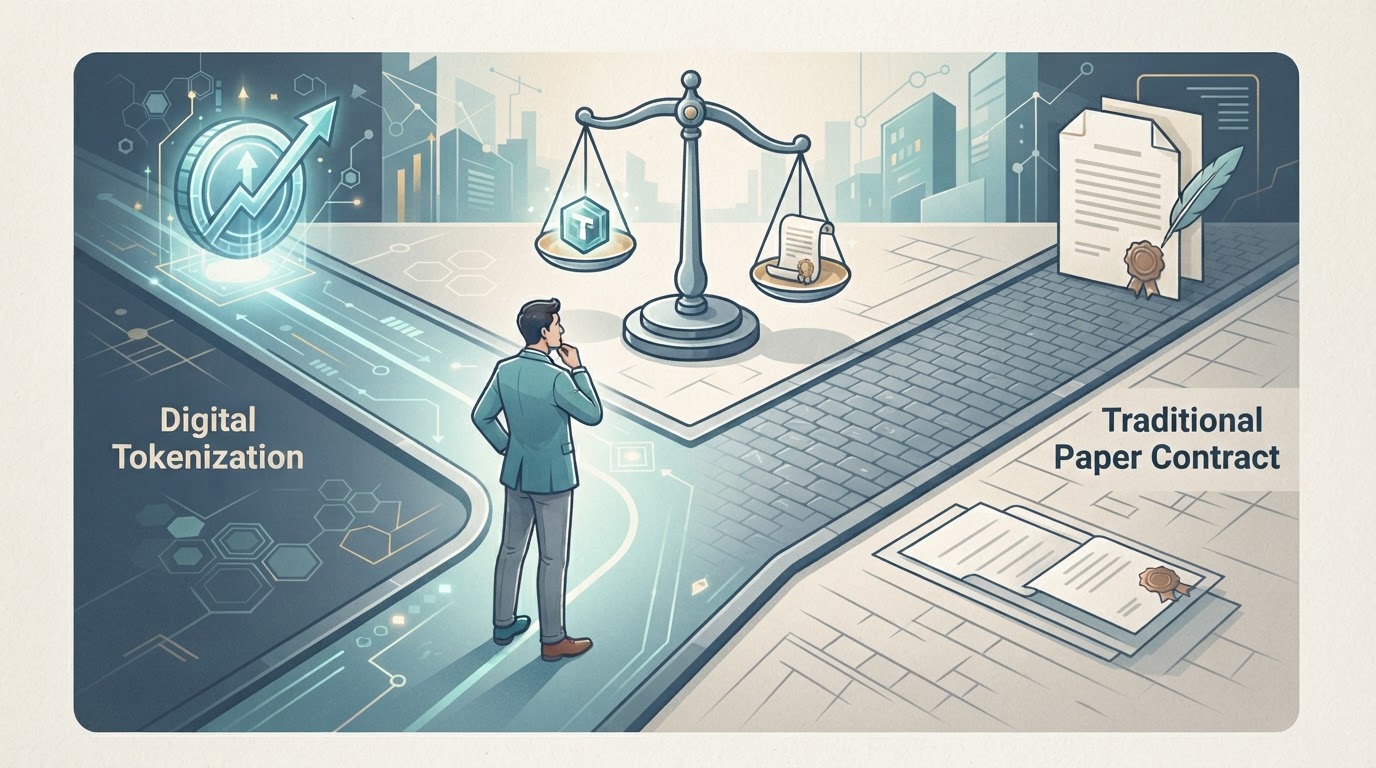
Introduction
Tokenization is powerful, but it is not always the right answer. The benefits — faster settlement, fractional ownership, automated compliance, broader distribution — come with real costs in legal fees, technology, and ongoing administration. This article explains how to decide whether tokenization makes sense for a particular asset or business before you spend six figures building it.
When Tokenization Pays Off
Tokenization tends to justify its cost when the asset has one or more of these characteristics:
- A large investor base that benefits from fractional access and liquidity
- Recurring distributions that benefit from automated, auditable processing
- Complex transfer restrictions that compliance-aware tokens can enforce automatically
- A secondary-market demand that an ATS can serve
- Cross-border investor demand that benefits from standardized onboarding
When Tokenization Does Not Pay Off
Tokenization usually does not make sense when:
- The asset is small and the fixed cost of structuring exceeds the benefit
- There are only a handful of sophisticated investors who prefer direct contracts
- The asset has no income to distribute and no secondary liquidity
- Transfer restrictions are simple and a paper record already works fine
- The sponsor cannot afford the legal and compliance overhead of a regulated offering
The Cost-Benefit Test
Compare the incremental value tokenization creates — cheaper distribution, faster transfers, broader access, automated reporting — against the full lifetime cost of legal, technology, administration, and compliance. If the cost exceeds the benefit over a realistic holding period, tokenization is the wrong tool. A well-structured private placement will outperform a poorly conceived token.
Asset Suitability
Some assets are natural fits for tokenization: institutional real estate, private credit funds, trade-finance receivables, and infrastructure projects with predictable cash flows. Others are poor fits: single-owner assets with no secondary market, assets whose value depends on personal relationships, and assets so small that the structuring cost dwarfs the raise.
Investor Demand
Tokenization only delivers value if investors want the liquidity and access it provides. If your target investors are happy with a subscription agreement and quarterly statements, the blockchain adds cost without adding demand. Talk to your investor base before you build the technology.
Regulatory and Operational Burden
A regulated security token carries ongoing obligations: KYC refresh, transfer restrictions, reporting, and examinations. If your organization lacks the capacity to manage a compliant program, tokenization creates risk rather than reducing it. The technology does not replace the compliance team.
When Simpler Wins
It is worth saying plainly: there is no shame in choosing a traditional structure. A clean private placement, a well-drafted subscription agreement, and a competent administrator will outperform a tokenized offering whose economics do not justify the overhead. The issuers who succeed with tokenization are the ones who chose it because the asset and the investor base demanded it — not the ones who adopted it because the market seemed to expect it. The right answer to "should we tokenize?" is sometimes "not yet," and sometimes "not at all."
Conclusion
Tokenization is a tool, not a strategy. Use it where the asset, the investor base, and the economics justify the overhead, and use something simpler where they do not. The best issuers choose tokenization because it fits, not because it is fashionable.